



The short answer: Static stretching before training cuts strength by roughly 4–5% when you hold 60 seconds or longer, but holds under 30 seconds cost you almost nothing. Stretching does not prevent soreness (it shaves under 1 point off a 100-point scale) and does not prevent injury. Use 5 minutes of dynamic work before, 30-second static holds after.
Almost every stretching rule you were taught in school gym class has been tested since — and most of them failed. Below is each claim, what the trials actually measured, and what to do instead. No “science says.” Every number here traces back to a study you can look up.
The six-myth scorecard
| Claim | Verdict | What the data shows | What to do instead |
|---|---|---|---|
| Static stretch before lifting to “warm up” | Mostly false | Holds >60 s: ~4.6% strength loss, ~1.9% power loss. Holds <30 s: ~1% or less | 5 min dynamic warm-up; keep any pre-session static hold to 15–20 s |
| Stretching prevents next-day soreness | False | Pooled effect: about 1–4 points on a 0–100 soreness scale — invisible in practice | Accept the soreness; keep training volume progressive |
| Stretching prevents injury | False | Stretching showed no significant protective effect; strength training cut injuries by roughly half | Load the tissue: eccentric and full-range strength work |
| Flexible = mobile | False | Passive range and controlled active range are different qualities | Train end-range strength, not just end-range reach |
| Longer holds are always better | Depends | Total weekly time matters more than per-hold time; ~5+ min per muscle per week drives range gains | 4 × 30 s per muscle, 3–4 days/week |
| Stretching permanently lengthens muscle | Mostly false | Short-term gains are mainly increased stretch tolerance, not longer fibres | Expect range to fade in 2–4 weeks without maintenance |
Myth 1: Static stretching prepares you to train
This is the one with the cleanest evidence. Simic and colleagues pooled 104 studies of pre-exercise static stretching and found maximal strength dropped about 5.4%, power about 1.9%, and explosive performance about 2.0%. But the dose mattered enormously: the penalty concentrated in holds of 60 seconds and longer. Behm’s 2016 review found that stretches under 60 seconds — and especially under 30 — produced effects small enough to be practically meaningless, particularly when a general warm-up and some dynamic work followed.
The practical version: if you hold a 90-second hamstring stretch and then try a max-effort set of pull-ups, you will feel it. If you hold 20 seconds and then do three minutes of dynamic work, you will not. The myth is not “static stretching is bad” — it is “long static holds are a warm-up.”
Pass test: you can complete your first working set at the same reps you hit last session. If your first set is consistently your worst, your warm-up is the problem.
Myth 2: Stretching prevents muscle soreness
The Cochrane review by Herbert, de Noronha and Kamper pooled 12 studies covering more than 2,300 participants. Stretching before or after exercise reduced soreness by roughly 1 to 4 points on a 100-point scale in the 24 to 72 hours afterward. That is statistically detectable and practically invisible — nobody can feel a 2-point difference on a scale where “sore” starts around 40.
Delayed-onset soreness comes from mechanical damage to muscle fibres, mostly from eccentric loading and from doing something new. The reliable fix is the repeated-bout effect: do the movement again, slightly lighter, and by the third exposure the soreness largely stops. Nothing you do with a strap or a roller changes that curve much — the same applies to foam rolling, which reduces perceived soreness without changing the underlying tissue damage.
Myth 3: Stretching prevents injury
Lauersen and colleagues pooled 25 randomised trials covering more than 26,000 participants and roughly 3,500 injuries to test which prevention strategies actually work. Stretching protocols showed no statistically significant reduction in injury rate. Strength training did — cutting acute injuries to well under half, and overuse injuries by roughly half.
The mechanism makes sense. Injuries usually happen when a tissue meets force it cannot control at a length it is not strong in. More passive range does not add force capacity. Loaded work through a full range does. This is why a proper bodyweight leg progression that trains deep positions under load protects hamstrings and knees better than any amount of toe-touching.
Pass test: you can hold the bottom of a deep squat for 60 seconds and stand out of it without hands. If you can reach the position but cannot own it, you have flexibility without strength.
Myth 4: Flexibility and mobility are the same thing
Flexibility is how far a joint can be pushed passively. Mobility is how far you can move it under your own control, with force available at the end. Plenty of people can lie down and have a partner press their leg to 120 degrees of hip flexion, then fail to lift it past 70 on their own. That 50-degree gap is the part that matters for training — and it closes with strength work in the outer range, not with more stretching. We cover the testing protocols in detail in mobility vs flexibility.
Test the gap yourself: measure your passive straight-leg raise (someone lifts your leg), then your active one (you lift it). Gap under 15 degrees is fine. Gap over 30 degrees means you need loaded end-range work, not another stretching session.
Myth 5: Hold for 30 seconds — no, 60 — no, 2 minutes
The “30-second rule” got locked in by a handful of 1990s studies and never really got re-examined by the people repeating it. What later work suggests is that per-hold duration matters less than accumulated weekly time on a given muscle. Roughly five minutes per muscle group per week is where meaningful range gains start showing up, and how you slice that — six 50-second holds or ten 30-second holds — matters far less than whether you actually accumulate it.
| Goal | Sets × hold | Frequency | Weekly total per muscle |
|---|---|---|---|
| Maintain current range | 2 × 30 s | 3 days/week | 3 min |
| Build new range | 4 × 30 s | 4 days/week | 8 min |
| Aggressive (splits, deep pike) | 4 × 60 s | 5 days/week | 20 min |
| Pre-session priming only | 1 × 15–20 s | Training days | Not counted |
Myth 6: Stretching lengthens your muscles
Over a few weeks, the range you gain comes overwhelmingly from increased stretch tolerance — your nervous system stops guarding the position — rather than from structural change in the muscle. Measurements of passive stiffness in short-term stretching trials often barely move, while range improves substantially. The tissue did not get longer. You got better at tolerating the end position.
The practical consequence: range is a trained quality, and it detrains. Stop for 3 to 4 weeks and most of what you gained goes. Budget two short maintenance sessions per week forever, the same way you budget training volume.
What to actually do
Before training (5 minutes): 2 minutes of general work to raise temperature — brisk walking, jumping jacks, easy skipping — then 6 to 8 dynamic movements, 8 to 10 controlled reps each, moving progressively deeper. Add ramp-up sets of your first exercise. No holds longer than 20 seconds.
After training or on rest days (8–10 minutes): pick the 3 or 4 positions that limit you, 4 × 30 seconds each, breathing out into the stretch rather than bouncing. This is where the range gains come from, and it costs you nothing because the session is already over. Pair it with the flows in mobility drills for better movement.
Pass test: after 8 weeks at 8 minutes per muscle per week, your sit-and-reach should improve by 3 to 6 cm. If it has not moved at all, you are not accumulating the time you think you are.
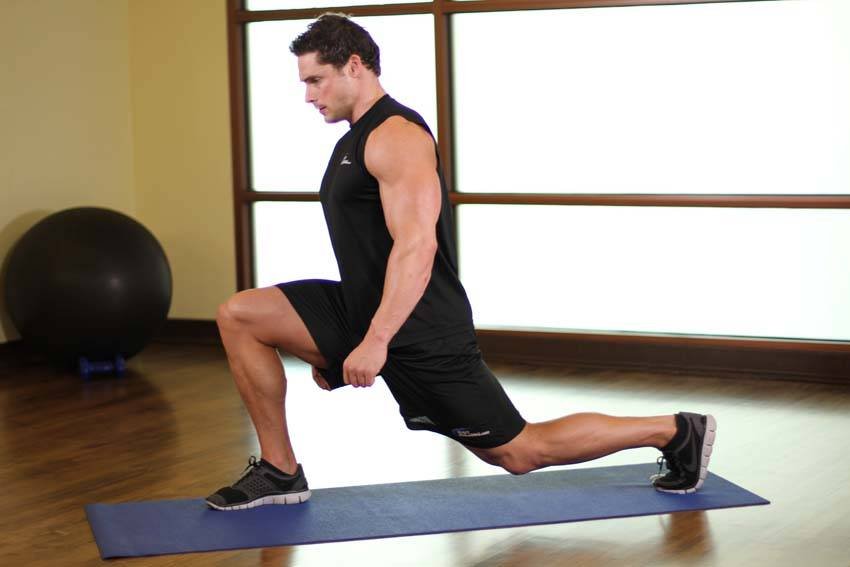
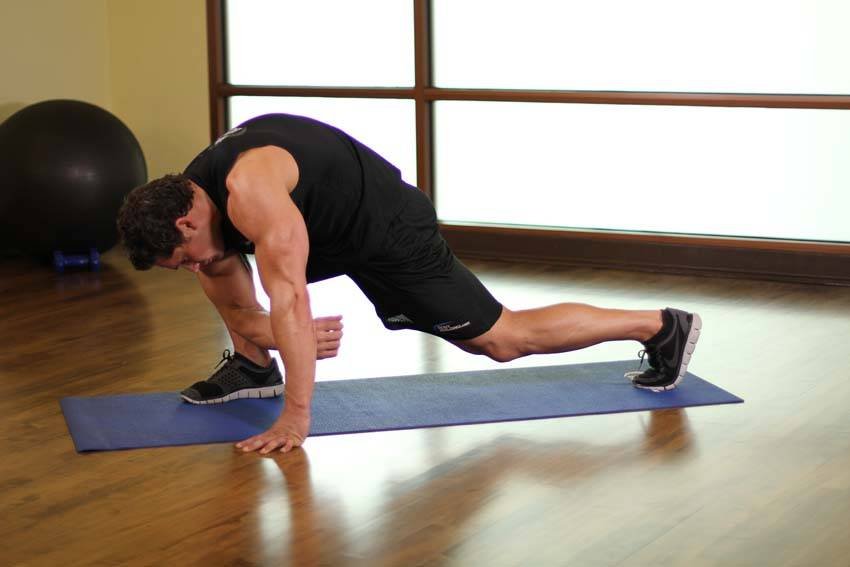
How to perform
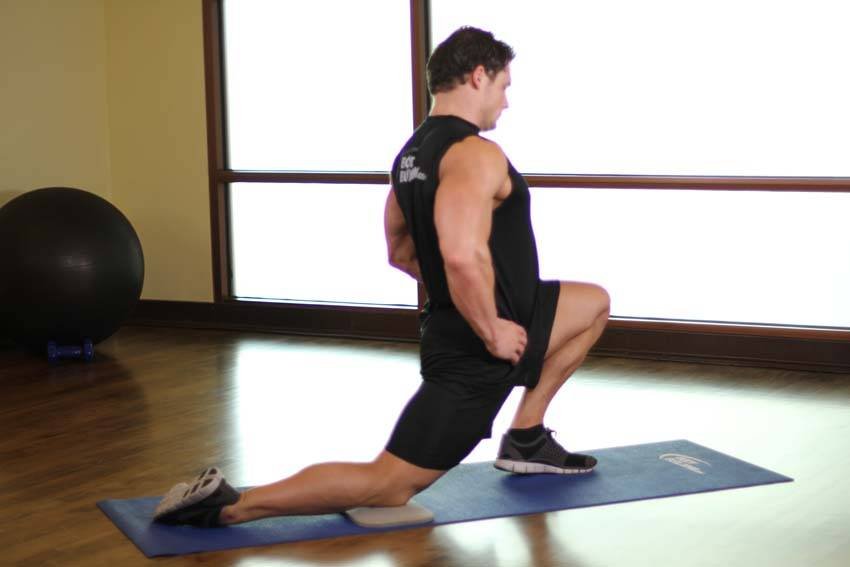
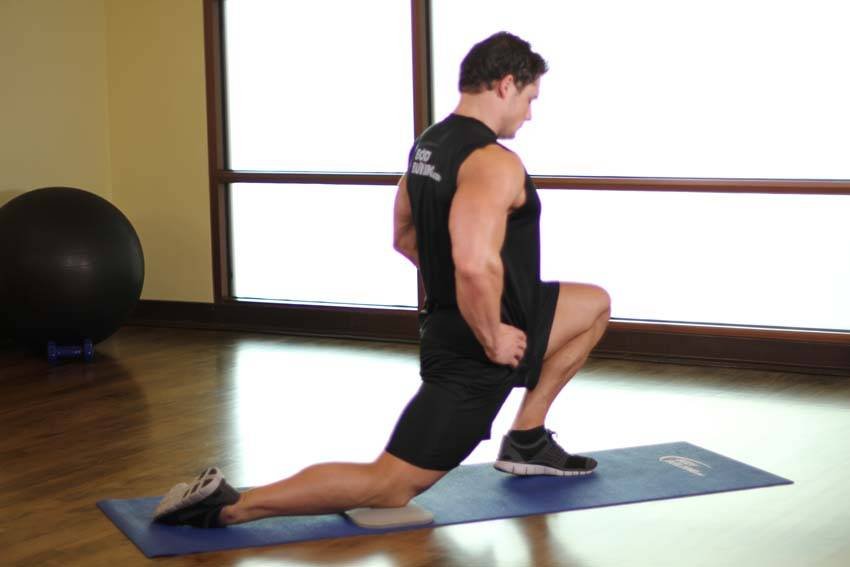
How to perform
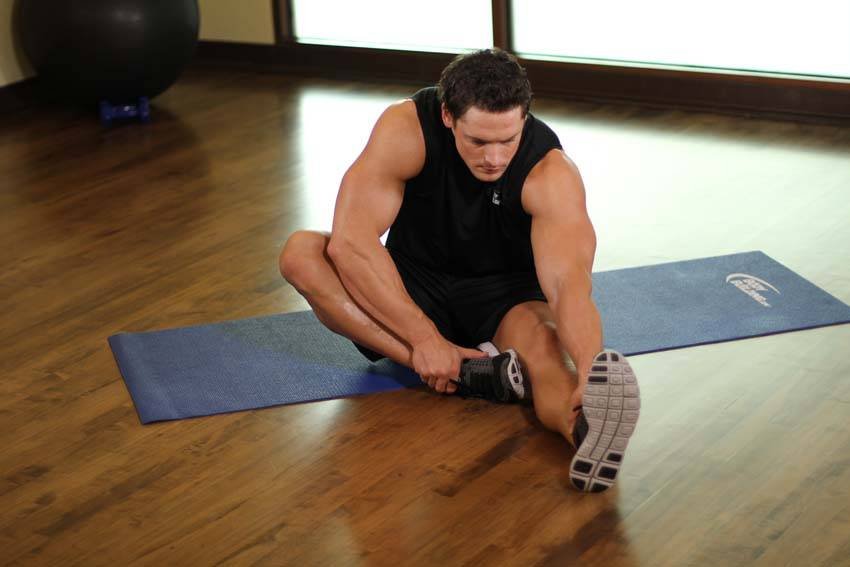
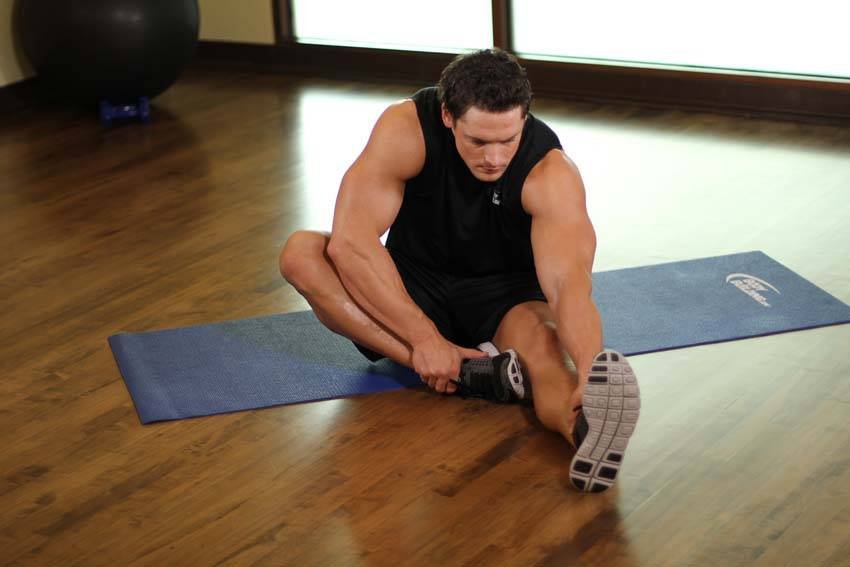
How to perform
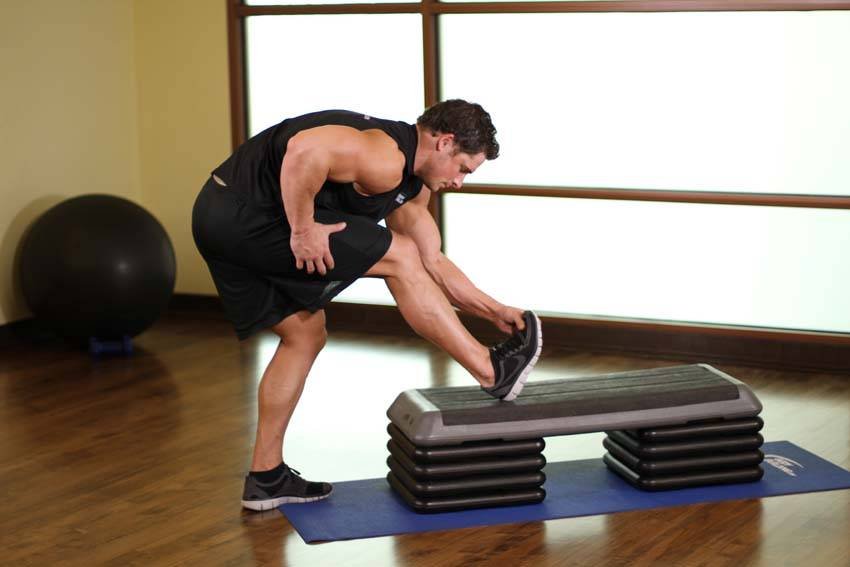
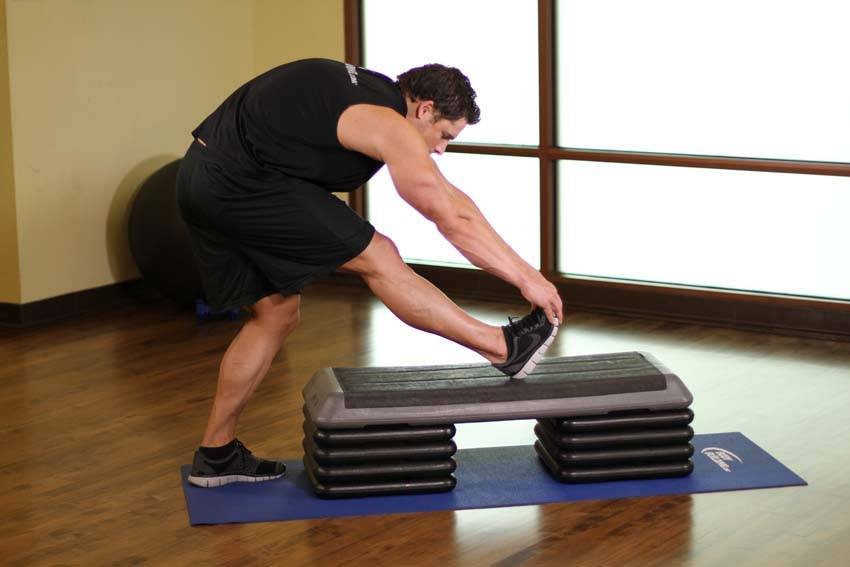
How to perform
FAQ
Should I stop static stretching before workouts entirely?
No. Keep holds to 15–20 seconds and follow them with dynamic work and ramp-up sets, and the measurable performance cost drops to about 1% or less — small enough to ignore. The penalty only becomes real at holds of 60 seconds and above with no dynamic work afterward.
How long until I see flexibility gains?
Range of motion starts improving within 2 to 3 weeks at roughly 5 to 8 minutes per muscle group per week. Most of that early gain is increased stretch tolerance rather than structural change, which is why it disappears within 3 to 4 weeks if you stop.
Is dynamic stretching better than static?
Better before training, not better overall. Dynamic movement raises tissue temperature and rehearses the ranges you are about to load without the strength penalty. Static holds are the more efficient tool for building new passive range — just put them after the session.
Can stretching fix my lower back pain?
Sometimes it helps symptoms temporarily, but stretching a muscle that is already overstretched and guarding usually does not solve the cause. Loaded strength work through a controlled range has better evidence behind it. Persistent pain lasting more than a few weeks is a question for a clinician, not a stretching routine.
Does PNF stretching beat regular static stretching?
Contract-relax methods tend to produce slightly larger acute range gains per minute spent, but the long-term difference over 6 to 8 weeks is modest. Since PNF usually needs a partner or a strap and more setup, plain static holds win on adherence for most people — and adherence is what determines the outcome.
References
- Simic L, Sarabon N, Markovic G. Does pre-exercise static stretching inhibit maximal muscular performance? A meta-analytical review. Scandinavian Journal of Medicine & Science in Sports. 2013;23(2):131–148. doi:10.1111/j.1600-0838.2012.01444.x
- Behm DG, Blazevich AJ, Kay AD, McHugh M. Acute effects of muscle stretching on physical performance, range of motion, and injury incidence in healthy active individuals: a systematic review. Applied Physiology, Nutrition, and Metabolism. 2016;41(1):1–11. doi:10.1139/apnm-2015-0235
- Herbert RD, de Noronha M, Kamper SJ. Stretching to prevent or reduce muscle soreness after exercise. Cochrane Database of Systematic Reviews. 2011;(7):CD004577. doi:10.1002/14651858.CD004577.pub3
- Lauersen JB, Bertelsen DM, Andersen LB. The effectiveness of exercise interventions to prevent sports injuries: a systematic review and meta-analysis of randomised controlled trials. British Journal of Sports Medicine. 2014;48(11):871–877. doi:10.1136/bjsports-2013-092538