


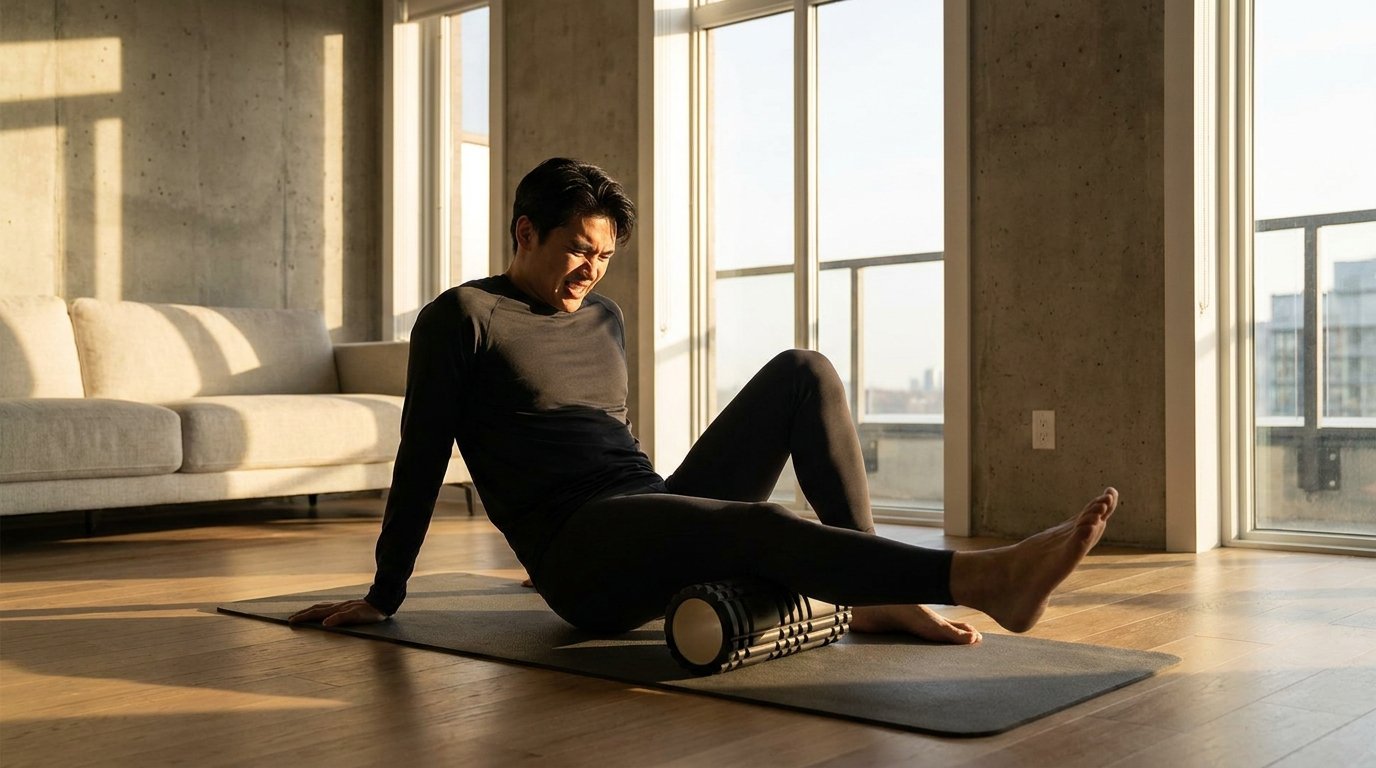
The short answer: Foam rolling is optional equipment-assisted self-massage, not a recovery requirement. Research suggests small flexibility benefits and possible effects on soreness, but overall performance and recovery effects are often minor. Start with light pressure on muscle, not joints or bones, and stop rather than trying to tolerate increasing pain.
| Question | Practical answer | Important limit |
|---|---|---|
| Do you need a roller? | No; it is an optional tool | No purchase is required for a recovery routine |
| What might it help? | Small flexibility changes and possibly soreness | Not a promised personal percentage or faster healing |
| How much pressure? | Light enough to remain comfortable and controlled | No numerical acceptable-pain target is established here |
| Where should you roll? | Accessible muscle areas with a stable setup | Not direct pressure on bones, joints, or the spine |
| What does “release” mean? | A common label for the practice | Not proof that adhesions or knots are mechanically broken |
What the research says
Wiewelhove and colleagues' 2019 meta-analysis examined foam rolling and performance or recovery.[1] It reported small flexibility benefits and possible reductions in post-exercise soreness or performance decrements, while overall effects were generally minor or negligible. Studies and protocols varied.
That evidence is narrower than “rolling makes you recover faster.” It does not prove healing, toxin removal, a fixed reduction in soreness, or better strength for every user. Do not translate a pooled study effect into a personal result or assume that a more painful session produces more benefit.
The phrase self-myofascial release is widely used, but the name is not proof that a roller physically breaks apart adhesions. If you choose the tool, judge it as an optional practice rather than a necessary repair mechanism. For broader purchase criteria, see the recovery tools guide.
Check suitability before pressure
HSS advises starting with light pressure, rolling muscle rather than bones or joints, and not rolling a broken bone or torn muscle.[2] Sudden increased pain or swelling, tingling, numbness, or weakness warrants assessment rather than harder rolling. This article cannot identify an injury or determine whether pressure is appropriate for you.
Choose a clear, nonslip floor and a comfortable stable position. If supporting your body on your hands or forearms is uncomfortable, do not force the setup. A professional can help determine suitable options; buying a softer roller does not automatically solve a suitability issue.
Skip aggressive direct pressure on the spine, kneecap, shin, hip bones, or other joints. Do not place the roller under your neck and apply bodyweight. The examples below deliberately focus on accessible muscle areas rather than attempting a whole-body medical treatment.
A simple light-pressure trial
Choose one area first, not an exhausting circuit. The times and repetitions below are editorial limits for a small trial, not an established optimal dose. Keep enough body contact with the floor to control pressure and stop easily.
| Area | Setup and action | Trial amount | Easier choice |
|---|---|---|---|
| Calf muscle | Sit with the roller under the fleshy calf, avoiding the back of the knee and ankle. Keep the other foot on the floor and enough weight supported to roll a short comfortable distance. | Up to 20–30 seconds on one side, rest and reposition, then the other side if comfortable | Keep more weight on the floor; use a smaller range or omit |
| Front thigh muscle | Only if comfortable on the floor: support yourself securely on forearms and the other leg, place the roller under the broad front-thigh muscle, and move a short distance without reaching the kneecap or hip bones | Up to 20–30 seconds on one side, rest and reposition, then the other side if comfortable | Reduce bodyweight pressure, shorten the motion, or skip this area entirely |
Do not cross one leg over the other to force extra calf pressure in this beginner trial. Do not balance precariously to reach a spot. If you cannot maintain a comfortable setup, choose an alternative instead.
Run the trial in four steps
- Begin with a few minutes of easy movement if appropriate; do not use rolling to prove that you are ready for hard exercise.
- Set up one area with light pressure and a short range. Breathe normally rather than bracing against discomfort.
- Stop before the suggested time if pressure is unpleasant, support becomes unstable, or symptoms appear. Take as much transition time as needed.
- Notice how the area feels afterward without repeatedly retesting to chase a better score. A pleasant sensation is not evidence that damaged tissue has healed.
The trial has no guaranteed total duration. Position changes and comfort matter more than completing a clock. Do not hold a painful point until it “lets go.”
Progress by controlling pressure, not enduring pain
If the initial trial is comfortable, you may repeat the same small amount on another occasion. There is no requirement to progress. Keep one area and modest pressure before trying more areas or longer contact.
Change one feature at a time: a slightly longer comfortable roll, a small increase in time, or a different accessible muscle area. More bodyweight and a harder-textured roller are not compulsory next steps. Regress by unloading more weight, shortening contact, or stopping altogether.
If you are sore after training, consider the whole workload rather than assuming you need more pressure. The active recovery guide discusses optional lower-demand choices. Sleep planning has a different role; use the practical sleep guide rather than treating rolling as a substitute.
Alternatives without buying anything
Gentle walking, comfortable movement, or rest may be more convenient. Stretching is a separate option; Mayo advises warming up, moving smoothly, and avoiding pain rather than forcing a range.[3] That guidance does not establish that stretching and rolling have identical effects.
If your goal is simply a manageable movement break, the eight-minute mobility routine offers plain instructions. You can choose neither. A recovery routine does not need every available tool.
FAQ
Is foam rolling necessary after every workout?
No. The cited evidence does not establish it as a universal requirement.[1] Consider whether it is comfortable and useful for your preferences, rather than adding it because a routine claims all soreness means tight fascia.
Should it hurt to work?
This guide does not use pain as a target. Start lightly, stop with pain or concerning symptoms, and avoid chasing a numerical discomfort threshold.[2] More pressure is not established as more effective here.
Can I roll directly over my lower back?
The beginner example does not include direct spinal pressure. Do not improvise an aggressive bodyweight setup to reach it. Ask a qualified professional about symptoms rather than trying to self-treat them with a roller.
What if I feel looser immediately?
You may notice a short-term change, but it does not prove tissue was repaired or adhesions were broken. Do not use that sensation as clearance for a harder session or a reason to ignore symptoms.
Is a hard roller better than a soft one?
These sources do not establish a universal winner. Choose a setup that allows light, controlled pressure, and do not buy density or texture as a guarantee of better recovery.