


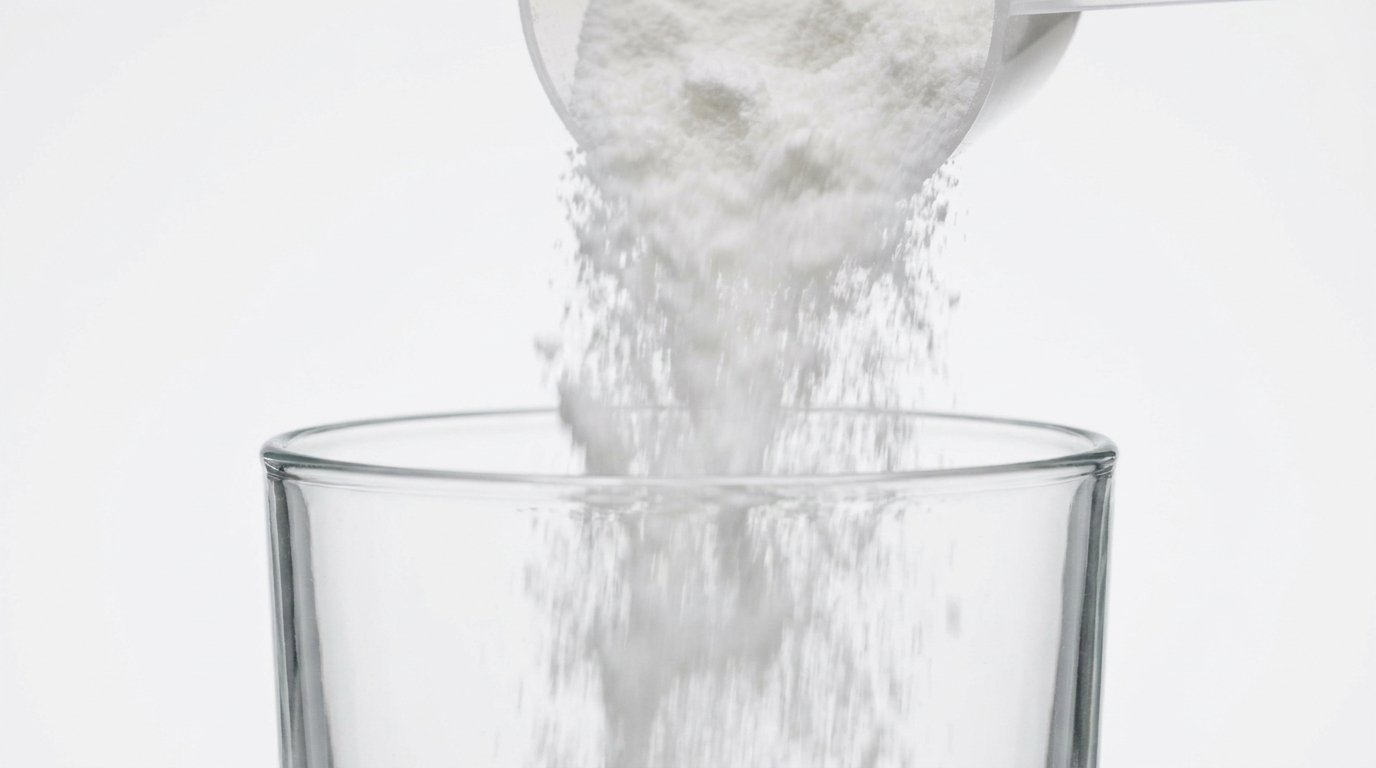
The short answer: creatine monohydrate wins. It is the only form with decades of trials behind it, it costs three to ten times less per dose than HCl or buffered versions, and no study has shown an alternative form raising muscle creatine or strength more than monohydrate does. Take 3–5 g every day, at any time, indefinitely.
Creatine is the most studied sports supplement in existence, which is exactly why the supplement industry keeps inventing new versions of it. Monohydrate is off-patent, cheap and unbrandable. HCl, buffered, ethyl ester and chelated forms exist to solve a marketing problem, not a physiological one. Here is what each form actually delivers, what it costs, and how to dose the one that works.
Every Form, Side by Side
| Form | Cost per 5 g dose | Evidence base | Verdict |
|---|---|---|---|
| Monohydrate (incl. Creapure) | $0.05–0.10 | Hundreds of trials; backed by the ISSN position stand | The default. Buy this. |
| Hydrochloride (HCl) | $0.25–0.50 | Better solubility shown; no trial showing more muscle creatine or strength | Only if monohydrate upsets your stomach |
| Buffered (Kre-Alkalyn) | $0.20–0.40 | 28-day RCT: no greater change in muscle creatine, body composition or performance | No advantage at 4× the price |
| Ethyl ester (CEE) | $0.20–0.40 | Degrades rapidly to creatinine; raises muscle creatine less than monohydrate | Avoid |
| Liquid / serum | Varies | Unstable once dissolved; degrades on the shelf | Avoid |
| Magnesium chelate | $0.30+ | Few small trials; no superiority demonstrated | Unnecessary |
The pattern is consistent across every alternative form: the marketing claim is about absorption or stomach comfort, and the outcome that matters — how much creatine ends up inside your muscle — is never better. Monohydrate is already about 99 percent bioavailable when taken orally, which leaves the competition almost no room to improve on.
Why Buffered and HCl Do Not Win
Buffered creatine is sold on the claim that a higher pH stops conversion to creatinine in the stomach, so you need less of it. That was tested directly: over 28 days of resistance training, a buffered form at both a low dose and a standard 5 g dose was compared against 5 g of monohydrate. Muscle creatine content, body composition and training adaptations came out no better than monohydrate — and the low-dose buffered group did worse on muscle creatine than the standard doses.
Creatine HCl’s pitch is solubility: it dissolves in far less water, so a smaller “micro-dose” is supposedly enough. Solubility in a glass is real and easy to demonstrate. What has never been demonstrated is that it produces higher muscle creatine stores or better performance than plain monohydrate. Until someone runs that trial, HCl is a more pleasant drink at five times the price.
Pass test: before buying any non-monohydrate form, look for a published trial comparing it against monohydrate on muscle creatine content or a performance outcome. If the label cites only solubility or absorption, you are paying for chemistry that stops before the muscle.
How Creatine Actually Works
Your muscles store creatine as phosphocreatine, which regenerates ATP during efforts lasting roughly 3–15 seconds. A typical muscle sits at about 120 mmol/kg dry mass; supplementation pushes that toward the ceiling of roughly 160. More phosphocreatine means slightly more work before the tank empties — in practice, one or two extra reps on a hard set, or a faster recovery between sets.
That is the whole mechanism. Creatine does not build muscle directly; it lets you accumulate more quality training volume, and the volume builds the muscle. Which is why it is worthless without a training stimulus and modest without adequate protein — see our protein guide for bodyweight athletes for the intake that makes the extra volume count.
Dosing: Loading Is Optional
| Protocol | Dose | Time to full stores | Trade-off |
|---|---|---|---|
| Loading phase | 20 g/day (4 × 5 g) for 5–7 days, then 3–5 g/day | 5–7 days | Fastest; the only protocol that commonly causes stomach upset |
| Daily dosing | 3–5 g/day from day one | ~28 days | Same endpoint, no GI issues, less powder used |
| Body-weight scaled | 0.03 g/kg/day maintenance | ~28 days | Useful above 90 kg or below 55 kg |
Both routes reach the same saturation point. Loading only matters if you have a specific date — a competition, a test week — less than a month away. Otherwise take 5 g a day and forget about it.
- Timing: irrelevant. Saturation is a weeks-long process, not an acute one. Take it whenever you will remember.
- With food: a meal containing carbohydrate and protein modestly improves uptake. Worth doing, not worth engineering.
- Cycling: unnecessary. The trials that produced these results used continuous daily intake, some for years.
- Missed days: harmless. Stores fall slowly; a skipped day changes nothing.
Non-Responders
Roughly 20–30 percent of people see little measurable benefit. The reason is usually a high baseline: if your muscles already sit near the storage ceiling — common in people who eat a lot of red meat and fish — there is not much room to add. The mirror image is vegetarians and vegans, who typically start lowest and respond most strongly.
You can spot your own response inside four weeks. Track total reps on one benchmark set weekly. If nothing shifts after a month of consistent 5 g doses and consistent training, you are likely a non-responder — stop and spend the money on food.
Myths, Checked
| Claim | What the evidence shows |
|---|---|
| Causes hair loss | Traces back to a single 2009 study reporting raised DHT in rugby players. No trial has ever measured actual hair loss. Reviews of the literature do not support the claim. |
| Damages the kidneys | No evidence of harm in healthy people, including multi-year use. Creatine raises serum creatinine as a measurement artifact — tell your doctor you supplement before a blood panel. |
| Makes you bloated | Water is drawn into the muscle cell, not under the skin. Expect roughly 1–2 kg of scale weight in the first weeks, mostly intracellular. |
| You have to cycle it | No. Continuous daily use is what the long-term safety data is based on. |
| It is a steroid | No. It is an amino acid derivative you already eat in meat and fish and synthesise in your liver. |
| Women should avoid it | No. The same dosing and the same benefits apply. |
What It Means for Bodyweight Training
Creatine is at its best in short, maximal, repeated efforts — which describes most calisthenics work sets. Expect one or two extra reps on sets in the 5–12 range and better performance on your third and fourth sets, where phosphocreatine depletion normally bites.
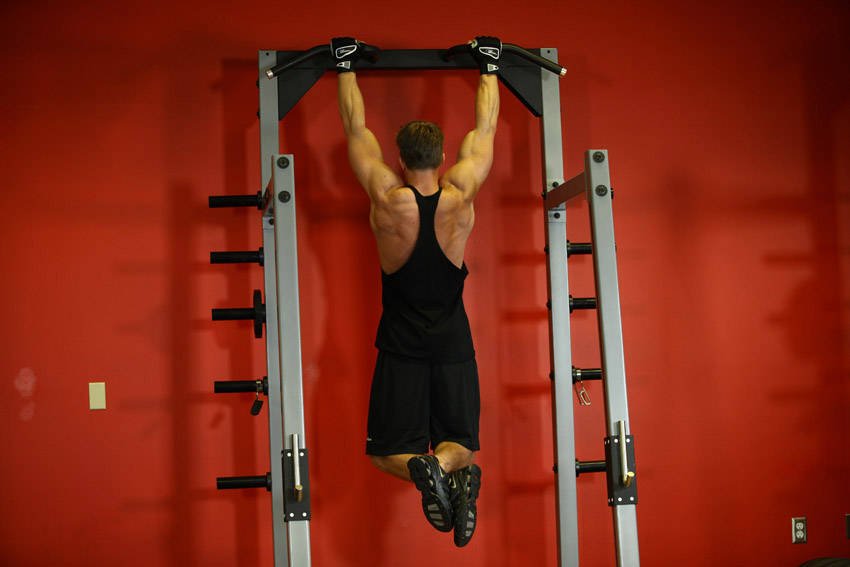
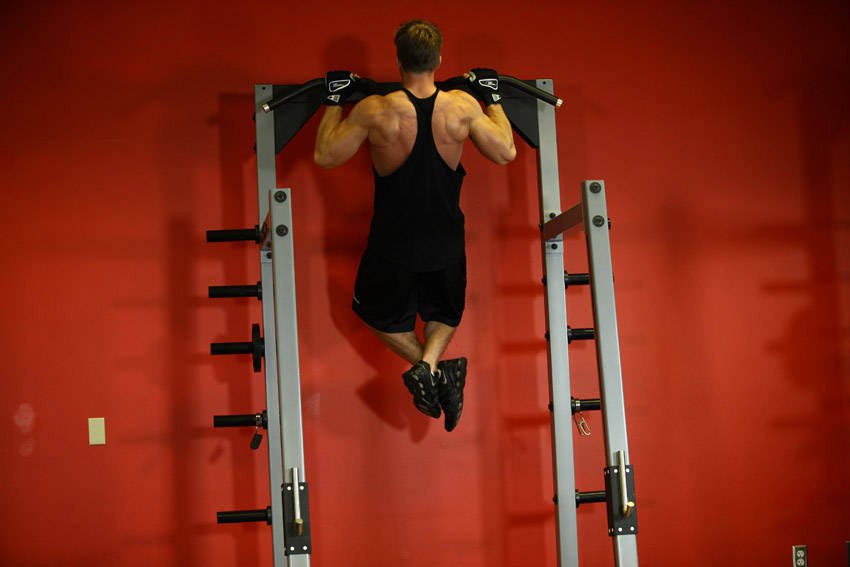
How to perform
- Grab the pull-up bar with the palms facing forward using the prescribed grip. Note on grips: For a wide grip, your hands need to be spaced out at a distance wider than your shoulder width. For a medium grip, your hands need to be spaced out at a distance equal to your shoulder width and for a close grip at a distance smaller than your shoulder width.
- As you have both arms extended in front of you holding the bar at the chosen grip width, bring your torso back around 30 degrees or so while creating a curvature on your lower back and sticking your chest out. This is your starting position.
- Pull your torso up until the bar touches your upper chest by drawing the shoulders and the upper arms down and back. Exhale as you perform this portion of the movement. Tip: Concentrate on squeezing the back muscles once you reach the full contracted position. The upper torso should remain stationary as it moves through space and only the arms should move. The forearms should do no other work other than hold the bar.
- After a second on the contracted position, start to inhale and slowly lower your torso back to the starting position when your arms are fully extended and the lats are fully stretched.
- Repeat this motion for the prescribed amount of repetitions.
There is one honest trade-off nobody selling creatine mentions. Bodyweight strength is a ratio, and 1–2 kg of intracellular water is added to the wrong side of it. If your goal is a first pull-up or a one-arm progression, that extra weight can briefly cancel the extra reps. Give it six weeks — the strength gain outpaces the water — or skip creatine entirely while chasing a specific max-effort skill and take it during volume blocks instead. Our pull-up progression works either way.
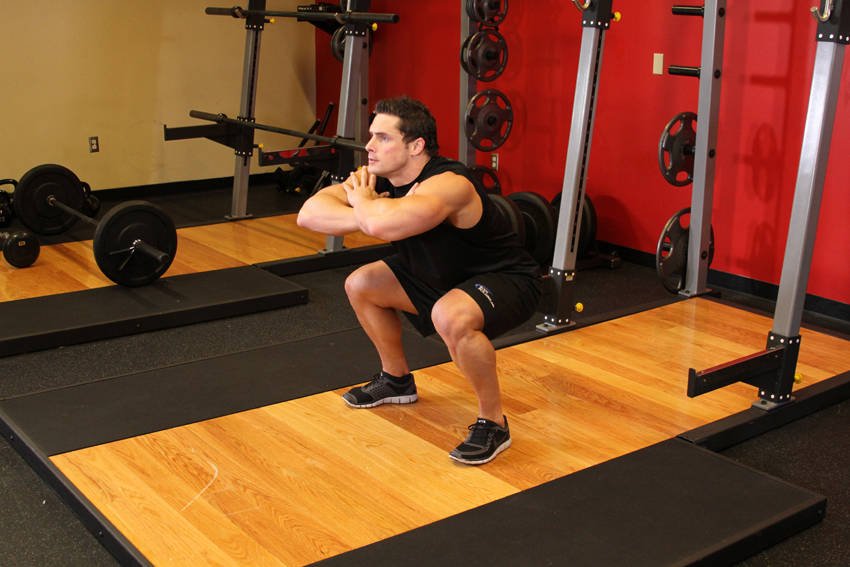
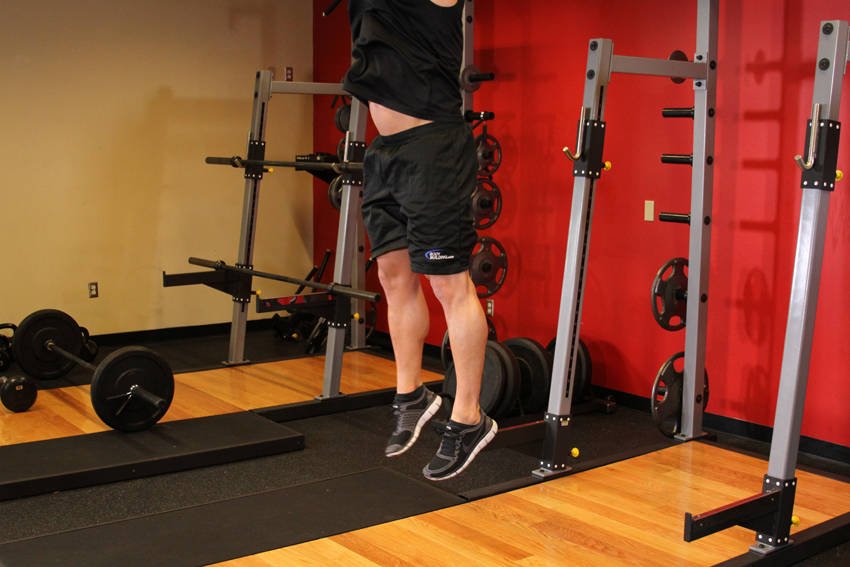
How to perform
- Cross your arms over your chest.
- With your head up and your back straight, position your feet at shoulder width.
- Keeping your back straight and chest up, squat down as you inhale until your upper thighs are parallel, or lower, to the floor.
- Now pressing mainly with the ball of your feet, jump straight up in the air as high as possible, using the thighs like springs. Exhale during this portion of the movement.
- When you touch the floor again, immediately squat down and jump again.
- Repeat for the recommended amount of repetitions.
The bigger point: creatine is a small multiplier on a large base. It is worth roughly a few percent on performance, which is real but modest next to what progressive overload and adequate protein deliver. Buy it after those are handled, not before.
How to Buy It
- Ask for micronised creatine monohydrate. Micronised only means finer particles — it mixes better, and costs the same.
- Look for a third-party test mark (Informed Sport, NSF Certified for Sport) if you compete under drug testing.
- Ignore blends. Pre-workouts with 1–2 g of creatine per scoop are underdosed by half.
- Budget check: a 500 g tub of monohydrate is 100 doses and typically costs less than a month of a branded HCl product.
FAQ
Is creatine HCl better than monohydrate?
No published trial has shown HCl producing more muscle creatine or better performance than monohydrate. It does dissolve more readily, which can help if monohydrate causes you stomach discomfort. For everyone else it is the same benefit at several times the cost.
Do I need a loading phase?
Only if you want full stores within a week. Loading uses 20 g/day for 5–7 days; taking 3–5 g/day reaches the same saturation in about a month with no stomach upset. Both end in the same place.
When should I take creatine?
Whenever you will actually remember. Saturation builds over weeks, so no single dose is time-sensitive. Taking it with a meal containing carbohydrate and protein slightly improves uptake, but daily consistency matters far more than timing.
Does creatine cause hair loss?
The concern comes from one 2009 study that measured a rise in DHT in rugby players — not hair loss itself. No trial has since demonstrated hair loss from creatine, and reviews of the evidence do not support the claim.
Will creatine make me heavier?
Expect about 1–2 kg in the first few weeks, drawn into the muscle cell rather than under the skin. For bodyweight athletes chasing a strength-to-weight skill that is a real short-term trade-off; for everyone else it is invisible.
References
- Kreider RB, et al. (2017). International Society of Sports Nutrition position stand: safety and efficacy of creatine supplementation in exercise, sport, and medicine. Journal of the International Society of Sports Nutrition. PubMed 28615996
- Jagim AR, et al. (2012). A buffered form of creatine does not promote greater changes in muscle creatine content, body composition, or training adaptations than creatine monohydrate. Journal of the International Society of Sports Nutrition. PubMed 22971354
- Jäger R, et al. (2011). Analysis of the efficacy, safety, and regulatory status of novel forms of creatine. Amino Acids. PubMed 21424716
- Antonio J, et al. (2021). Common questions and misconceptions about creatine supplementation: what does the scientific evidence really show? Journal of the International Society of Sports Nutrition. PubMed 33557850