


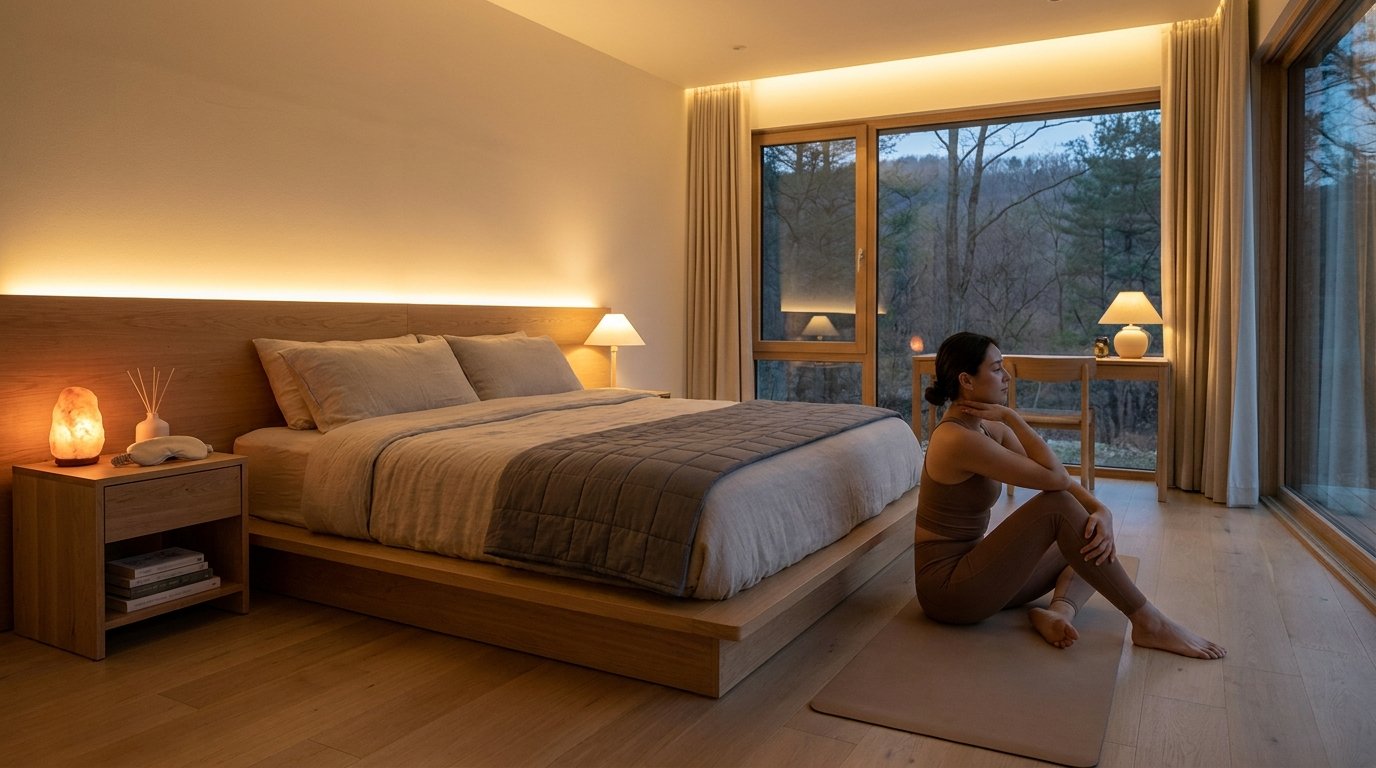
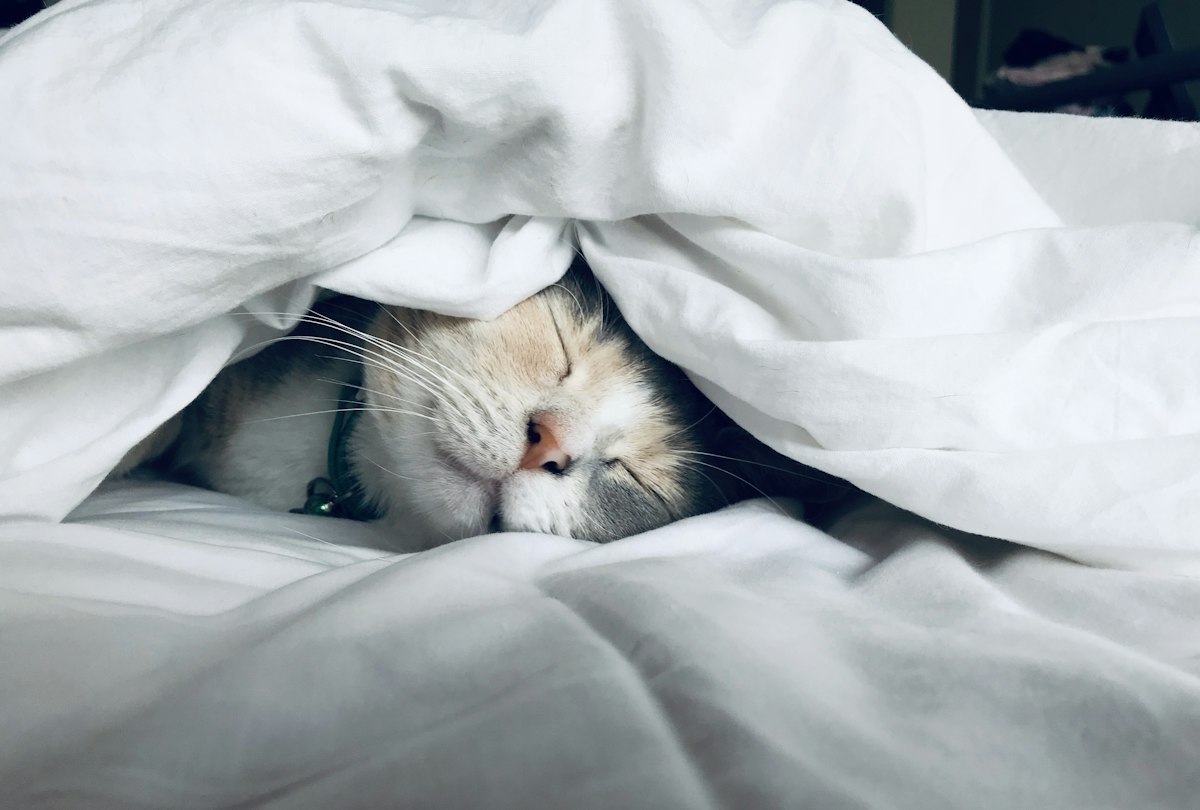
Sleep is the foundation of recovery. Poor sleep reduces muscle protein synthesis by 18%, increases cortisol by 37%, and decreases testosterone by 15%. Here are 15 proven strategies to optimize your sleep.
Environment Optimization
1. Temperature: Keep bedroom at 65-68°F (18-20°C). Your core temperature needs to drop 2-3°F to initiate sleep.
2. Darkness: Use blackout curtains or a sleep mask. Even small amounts of light suppress melatonin production.
3. Quiet: Use earplugs or white noise machine. Sudden noises fragment sleep even if you don’t wake up.
4. Air quality: Open window for fresh air or use HEPA air purifier. High CO2 levels reduce sleep quality.
Behavioral Strategies
5. Consistent schedule: Same bedtime ±30 minutes, even weekends. This is the #1 predictor of sleep quality.
6. No screens 60 minutes before bed: Blue light suppresses melatonin by 50%. Use blue light filters if you must use devices.
7. Caffeine curfew: No caffeine after 2 PM. Half-life is 5-6 hours, quarter-life is 10-12 hours.
8. Alcohol avoidance: Alcohol fragments REM sleep and reduces sleep quality by 40%, even if you fall asleep faster.
9. Exercise timing: Finish intense workouts 3+ hours before bed. Morning or afternoon exercise improves sleep quality.
Nutrition for Sleep
10. Magnesium: 400mg magnesium glycinate before bed improves sleep quality by 15%.
11. Tart cherry juice: Natural melatonin source. 8 oz before bed increases sleep time by 84 minutes.
12. Avoid large meals: Finish eating 2-3 hours before bed. Digestion raises core temperature and disrupts sleep.
13. Tryptophan foods: Turkey, eggs, cheese, nuts contain tryptophan, precursor to melatonin.
Advanced Techniques
14. Morning sunlight: 10 minutes of sunlight within 30 minutes of waking resets circadian rhythm. Critical for night owls.
15. Breathing exercises: 4-7-8 breathing (inhale 4 sec, hold 7 sec, exhale 8 sec) activates parasympathetic nervous system.
Tracking Sleep Quality
Use a sleep tracker (Oura Ring, Whoop, or phone app) to monitor:
- Total sleep time (aim for 7-9 hours)
- Deep sleep (aim for 1.5-2 hours)
- REM sleep (aim for 1.5-2 hours)
- Sleep efficiency (aim for 85%+)