


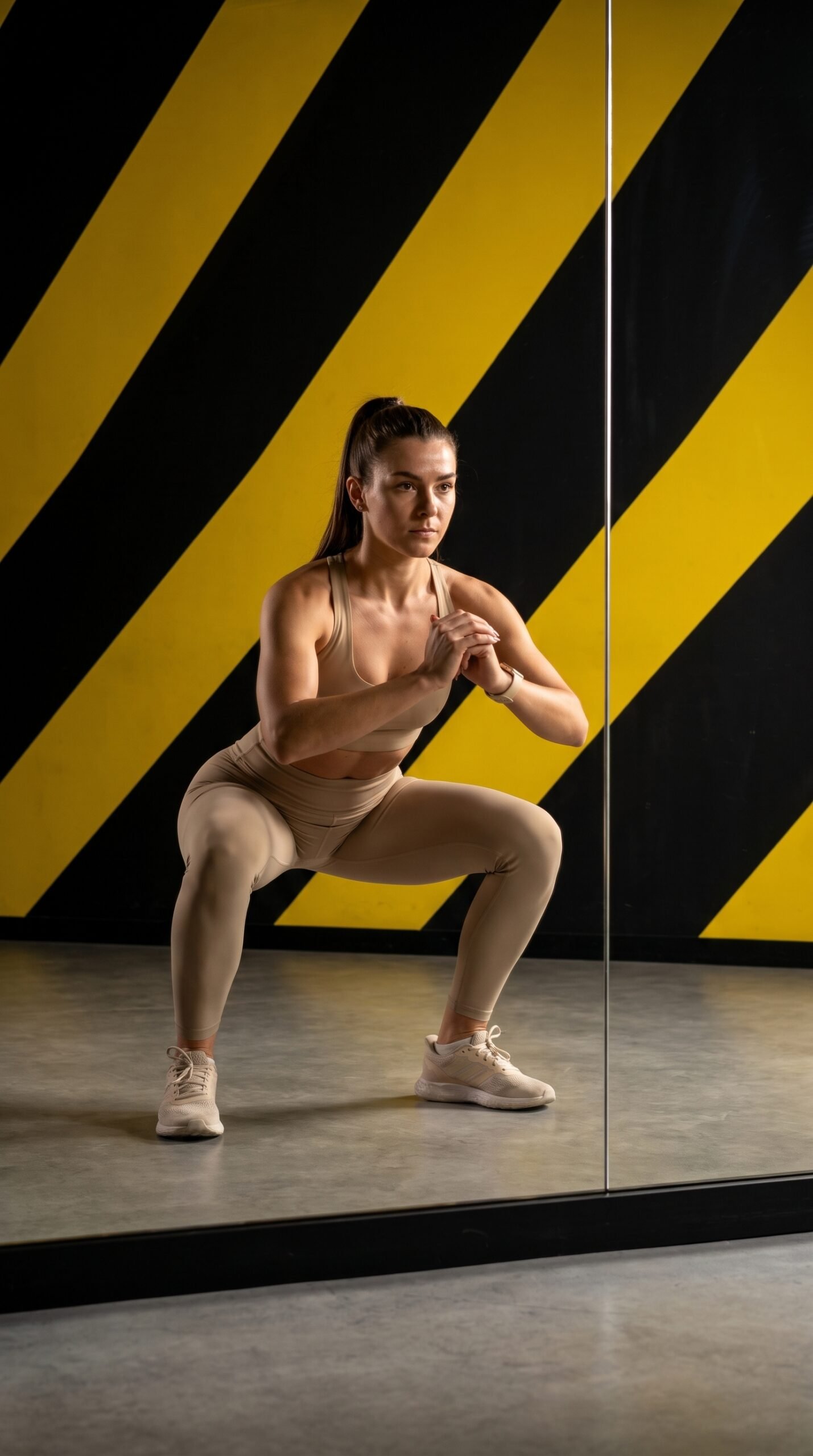
Why sissy squat progression matters
Sissy squats look like cheating. They aren’t. They’re a brutally effective bodyweight quad exercise that builds knee stability and patellar tendon resilience.
The 4-phase progression framework
Every bodyweight skill follows a similar arc. We’ve condensed it into four phases you can rotate weekly:
- Phase 1 — Pattern recognition: Learn the shape. Slow eccentrics, no ego reps.
- Phase 2 — Volume accumulation: 3-4 sets of 6-10 reps, RPE 7. Focus on consistent range of motion.
- Phase 3 — Density work: Pair the move with an opposite-pattern drill (push/pull, flex/extend).
- Phase 4 — Loaded variation: Add a slow tempo, pause, or unilateral challenge to keep progress linear.
Sample weekly schedule
| Day | Focus |
|---|---|
| Mon | Phase 2 — main lift + accessory |
| Tue | Zone 2 cardio + mobility |
| Wed | Phase 3 — density + tempo work |
| Thu | Restorative: walk + breath work |
| Fri | Phase 2 — main lift + accessory |
| Sat | Phase 4 — loaded variation or skill practice |
| Sun | Full rest |
Common mistakes
- Skipping regressions. If you can’t do 3 clean reps of the easier version, you can’t do the harder one.
- Training to failure too often. Leave 2-3 reps in reserve on most sets; go to failure only on the last set of the day.
- Neglecting opposing patterns. Every pulling day needs a pushing counterpart (and vice versa).
How to know you’re ready to progress
Hit the form checklist below for 3 sessions in a row before moving to the next phase:
- Full range of motion, no momentum
- Breathing pattern consistent
- Core braced throughout
- No joint pain (muscle burn is OK)
FAQ
How long until I see results? 4-6 weeks for measurable strength gains on most progressions.
Can I do this every day? No. Muscles need 48h to recover from strength work. 3x/week is the sweet spot.
What if I’m over 40? Start at Phase 1 regardless of fitness level. Joint prep takes longer as we age.
Tags: sissy squat, quads, bodyweight legs, knee health